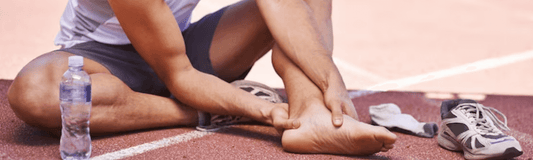
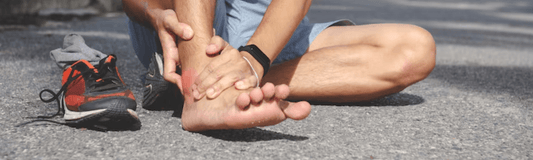
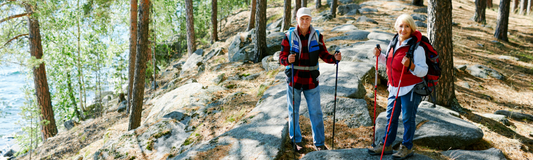
If you've finished a long hike or run with a blister on your heel, you've probably wondered whether anti-blister socks are worth trying. The short answer: blisters come from a mix of repeated movement, friction and moisture, and your sock sits exactly where all three happen. Research on socks is still a small field, but it points clearly to what a good sock needs to do.
Here's what causes blisters, what studies have found about socks, and how ArmaSkin liner socks are designed to help.
What actually causes foot blisters
With every step, the bones in your foot shift slightly inside your skin, while the skin's surface is held in place by your sock and shoe. The layers of skin in between are stretched back and forth. This is called shear. Repeat it thousands of times and those layers can separate and fill with fluid: a blister (Rushton et al., 2024; Knapik et al., 1995).
Three things make it more likely:
- Friction. The more the skin's surface grips the sock, the more the layers underneath are stretched (Knapik et al., 1995).
- Moisture. Damp, sweaty skin holds onto fabric more than dry skin. In a study of walkers on the Camino de Santiago, those with wet socks had about twice the risk of blisters (Esther et al., 2022).
- Repetition. Long distances, hot days and pressure points such as the heel, toes and ball of the foot all add up.
What the research says about socks
A few studies have looked at socks directly:
- In a double-blind study of runners, those wearing acrylic-fibre socks had fewer and smaller blisters than those in cotton socks (Herring and Richie, 1990).
- In the Camino study, wet socks made the biggest difference to blister risk, more than the fibre the socks were made from (Esther et al., 2022).
- A 2017 review of blister prevention in outdoor activities found that large, high-quality trials are still rare for every prevention method (Worthing et al., 2017).
The takeaway isn't that socks don't matter. It's that the material on its own isn't enough. A sock helps most when it's designed to deal with the two things behind most blisters: grip on the skin and moisture.
How anti-blister socks are designed to work
"Anti-blister sock" covers a few different designs:
- Double-layer socks use two fabric layers that slide against each other, so less movement reaches your skin.
- Toe socks give each toe its own sleeve, so toes don't rub against each other.
- Polymer liner socks are thin liners with a coating on the inside, worn under your usual sock.
If you've tried pulling on two pairs of socks, see our guide on whether two pairs of socks help. For more on liners, read what liner socks are and how they differ.
How ArmaSkin liner socks are made
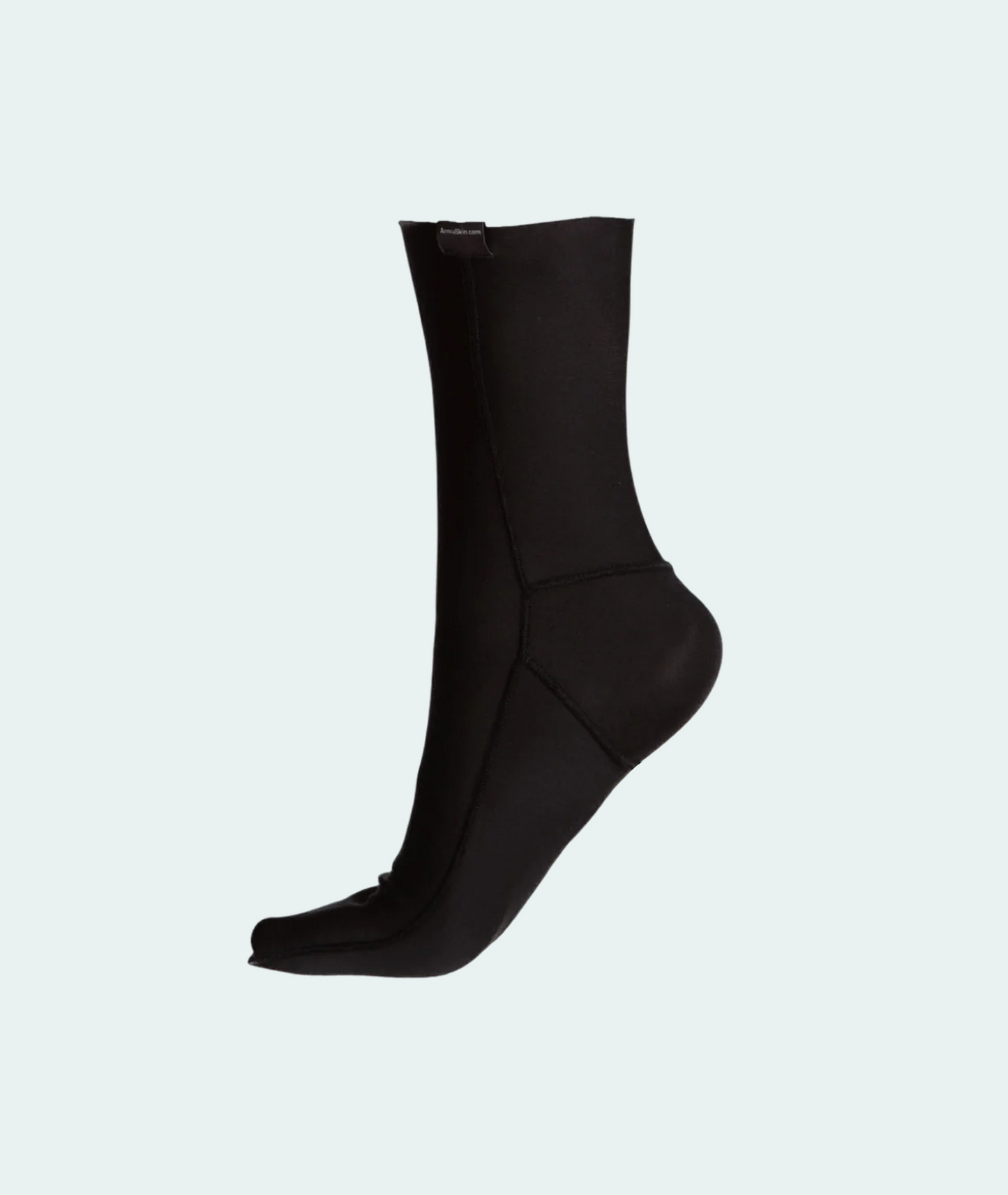
ArmaSkin makes polymer liner socks. According to ArmaSkin, they have:
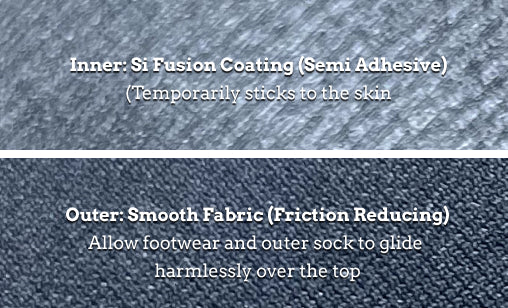
- A silicone polymer coating on the inside, designed to hold to your skin so the liner moves with your foot.
- A smooth outer surface, so your usual sock and shoe slide over the liner. The idea is that movement happens between the liner and your sock, not inside your skin.
- Left and right shapes, designed to fit each foot closely without bunching.
ArmaSkin's long liner socks are worn next to the skin under a hiking or walking sock. Short liners suit running shoes, and toe-sock liners are made for people who blister between their toes.
Who is most likely to benefit
Liner socks are designed for the situations where blisters are most likely:
- Long walks, hikes and runs, where the same movement repeats for hours.
- Hot or humid days, when feet sweat more.
- Wet conditions: rain, river crossings or dewy grass.
- People who blister in the same spot every time.
If you walk or train most days, the 3-pair trial pack lets you try all three styles and rotate pairs.
What customers say
“I was shocked that my feet were actually happy over the 10 day trek. I've since hiked 100s of miles in these.”
Beth, Verified Buyer · Liner Socks – Long
“Since then I have used Armaskin as an undersock for several walks, Cape to Cape, parts of the Bibbulmun, Picos de Europa and over 800km of the Heysen trail without a single blister.”
Patricia S., Verified Buyer · Liner Socks – Short
“Just finished a 15 hour expedition wearing the ArmaSkin liner socks. We had river crossings and steep slopes. I was really pleased to not even have any signs of blisters!”
Gregory, Verified Buyer · Liner Socks – Short
Individual experiences from verified ArmaSkin buyers. Results vary.

Try all three styles
Long liner, short liner and toe sock, each with a silicone polymer inner coating designed to reduce rubbing on your skin.
SHOP NOWHow to get the best result
- Get the size right. A liner that's too loose can wrinkle. Check the liner sock size guide.
- Wear it next to your skin. Put the liner on first, smooth out any creases, then pull your usual sock over the top. See how to put on and wear liner socks.
- Keep feet as dry as you can. Change into dry socks if yours get wet, especially on multi-day walks.
- Check your shoes. Your heel shouldn't lift much as you walk, and your toes need room. No sock can fully make up for shoes that don't fit.
- Try them on a shorter outing first before a big hike or race.
When to see a podiatrist
Good socks and shoes help most people, but see a health professional if:
- You keep getting blisters in the same place. A podiatrist can check your foot shape, the way you walk and your footwear.
- A blister looks infected: it's hot, very painful, filled with yellow or green pus, or the skin around it is red or swollen. The NHS advises seeing a GP.
- You have diabetes or poor circulation. Have any foot blister checked promptly.
Frequently asked questions
Will anti-blister socks guarantee I never get a blister?
No sock can promise that. Blisters depend on distance, heat, moisture and shoe fit too. ArmaSkin liner socks are designed to reduce the rubbing that causes them.
Can I wear them with my own socks?
Yes. The liners are designed to be worn under your usual hiking, walking or running sock.
Which length should I choose?
Long liners for boots and hiking, short liners for running and everyday shoes, and toe-sock liners if you blister between your toes.
Are thick or thin socks better for blisters?
Thickness alone doesn't decide it. See thick or thin socks for blisters.
The bottom line
Blisters are caused by repeated movement in the skin, made worse by friction and moisture. Research on socks is limited but consistent on one point: what's touching your skin matters. ArmaSkin liner socks are designed to take that movement away from your skin. If blisters keep cutting your walks short, try ArmaSkin's long liner socks.